When people think about wellness in Bangkok, they usually picture luxury spas with frangipani-scented towels and marble bathtubs. And those exist — they're wonderful. But Bangkok's wellness culture runs so much deeper than the five-star treatment rooms. It's woven into daily life in ways that are easy to miss if you're only looking at the tourist version.
Traditional Healing, Modern City
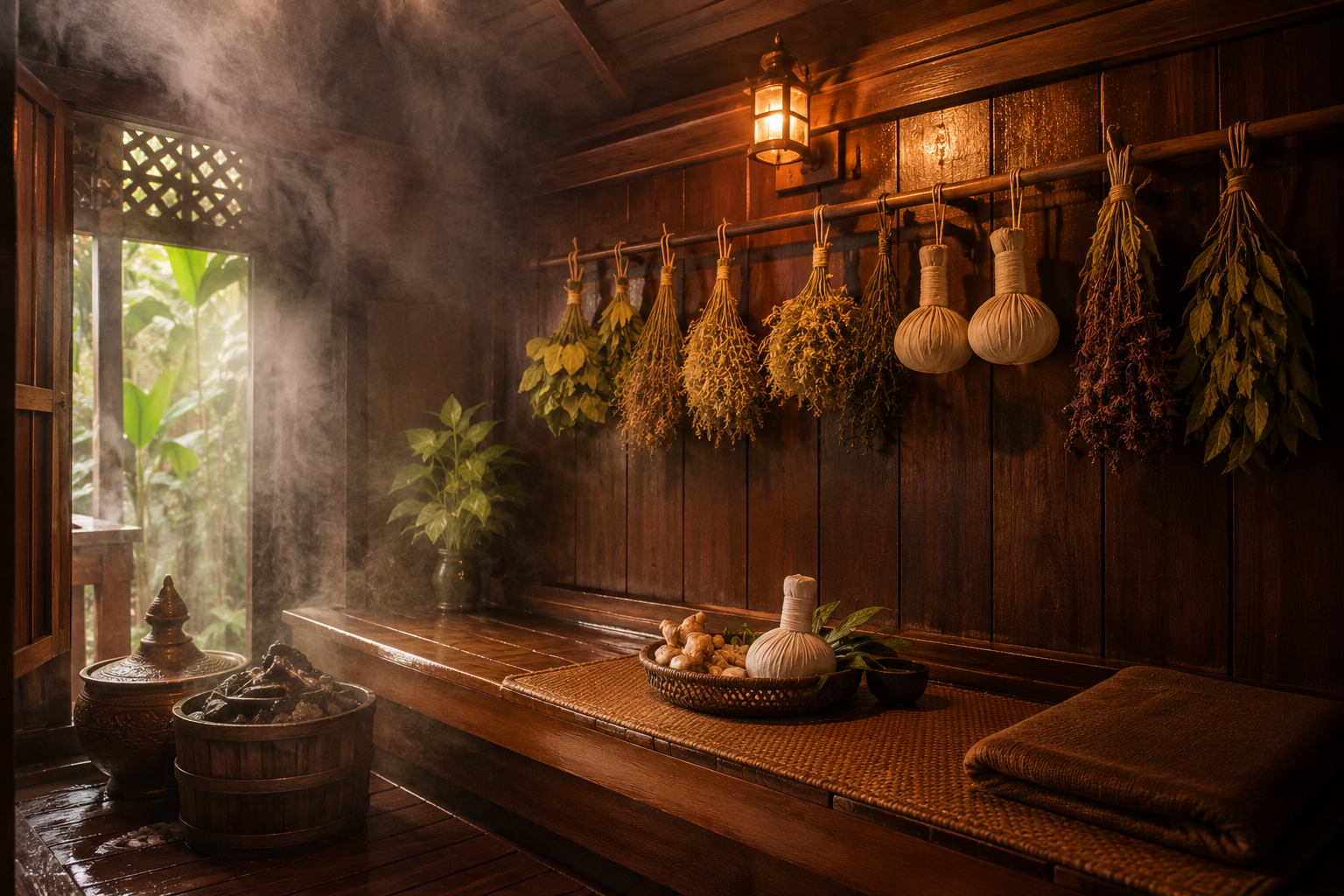
Thai traditional medicine has been practised for centuries, and it hasn't been replaced by modern wellness trends — it's been absorbed into them. Herbal steam rooms at neighbourhood temples, where bundles of lemongrass, ginger, and turmeric release their oils into the air, cost next to nothing and are used by locals after work the way Westerners might hit a gym. It's healthcare and self-care rolled into one.
Wat Pho, famous for its reclining Buddha, is also Thailand's oldest school of traditional massage. The techniques taught there have been passed down for generations, and you can still receive a treatment in the temple grounds for a fraction of what you'd pay elsewhere. For those serious about exploring what's available across the city, Bangkok's best massage spots range from temple courtyards to tucked-away studio spaces that most visitors never find.
Movement as Medicine
Bangkok's parks come alive before dawn. Lumpini Park fills with tai chi practitioners, joggers, and groups doing synchronised aerobics to music from portable speakers. Benjakitti Park has a running track surrounded by water that feels almost meditative at sunrise. Muay Thai gyms, once the domain of fighters, now welcome anyone looking for a workout that's equal parts physical and mental.
Yoga studios are everywhere, but the interesting ones blend Thai and Indian practices. Some incorporate rue si dat ton — an ancient Thai stretching system that predates modern yoga — into their classes. It's gentler, more meditative, and deeply connected to the body's energy lines.
Food as Wellness
Thai people don't separate food from health the way many Western cultures do. The concept of gin pen ya — eating as medicine — is embedded in the cuisine. Tom kha gai isn't just coconut soup; the galangal, lemongrass, and kaffir lime leaves are all recognised in traditional medicine for their anti-inflammatory properties. The balance of sour, sweet, salty, and spicy in a single meal isn't just about flavour — it's about keeping the body in equilibrium.
Why Bangkok Gets Wellness Right
The difference between wellness in Bangkok and wellness in, say, Los Angeles is accessibility. Here, it's not a luxury. A traditional massage costs less than a cocktail. Herbal saunas are free at many temples. Fresh fruit is sold on every corner. The gym in the park is open air and costs nothing. Bangkok doesn't package wellness as a product — it offers it as a way of life, available to everyone, every day.