Thailand has over 40,000 Buddhist temples, and visiting them is one of the most meaningful things you can do in the country. But temples are active places of worship, not museums, and the way you behave inside one matters enormously to the Thai people around you. Getting the etiquette right isn't difficult — it just requires a little awareness.
Dress Respectfully
This is the most common mistake visitors make. Temples require covered shoulders and knees — no tank tops, shorts, or revealing clothing. Many of Bangkok's major temples, like the Grand Palace complex and Wat Phra Kaew, have strict dress codes enforced at the entrance. If you're caught in shorts, some will lend you a sarong, but not all. Carry a light scarf or shawl in your bag and you'll never be turned away.
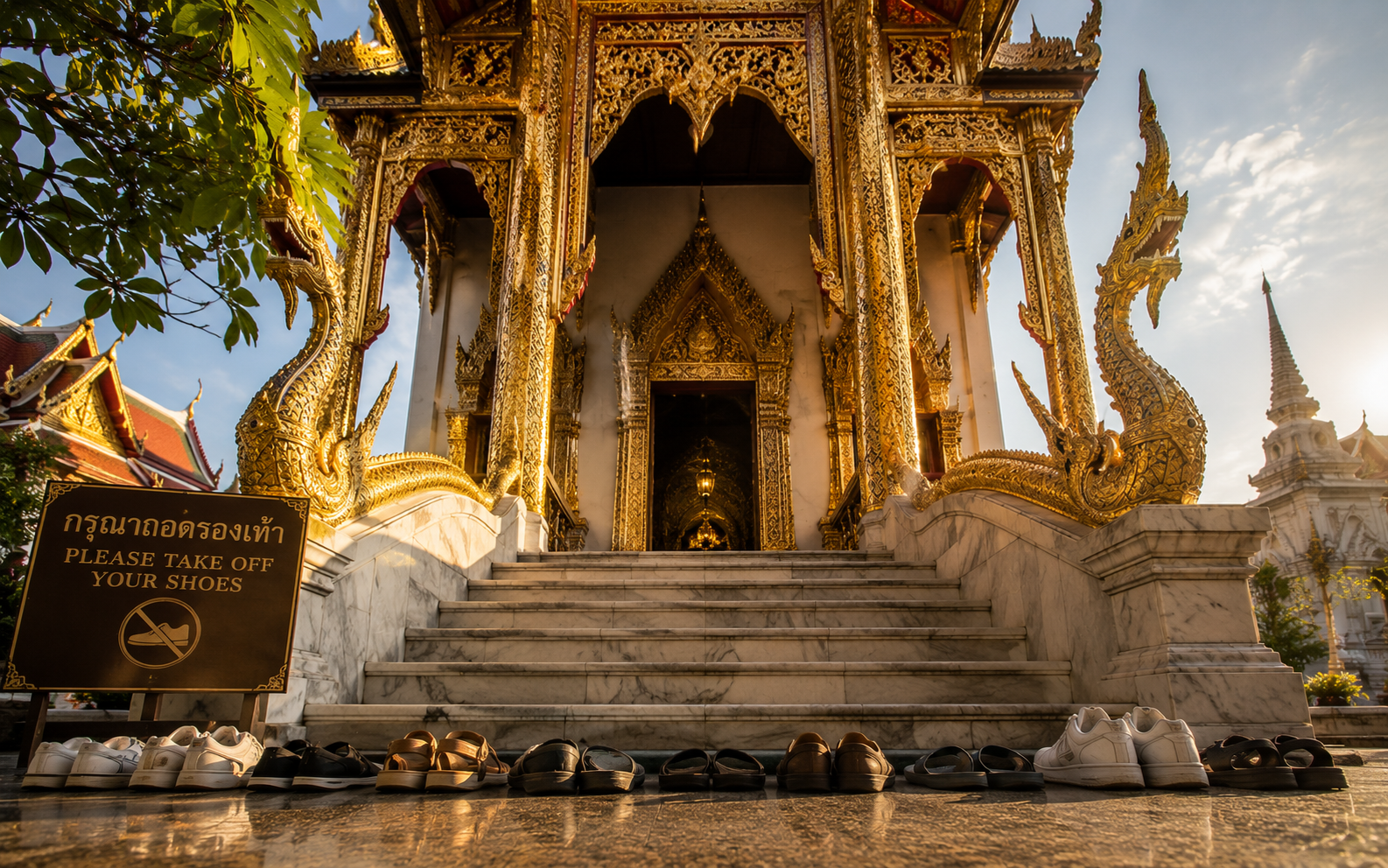
Shoes come off before entering any building within the temple grounds. You'll see rows of sandals and shoes outside every doorway. This is non-negotiable — it applies to everyone, from tourists to the Thai Prime Minister.
How to Behave Inside
Sit with your feet tucked behind you, never pointed toward the Buddha image. The soles of your feet are considered the lowest part of the body in Thai culture, and pointing them at something sacred is deeply disrespectful. If you're not sure how to sit, look at what the Thai visitors are doing and mirror them.
Keep your voice low. Temples are quiet places, and loud conversations — especially in the main prayer hall — draw disapproving looks. Photography is usually allowed in outdoor areas but restricted inside the main bot or viharn. Look for signs, and when in doubt, put the camera away.
Interacting With Monks
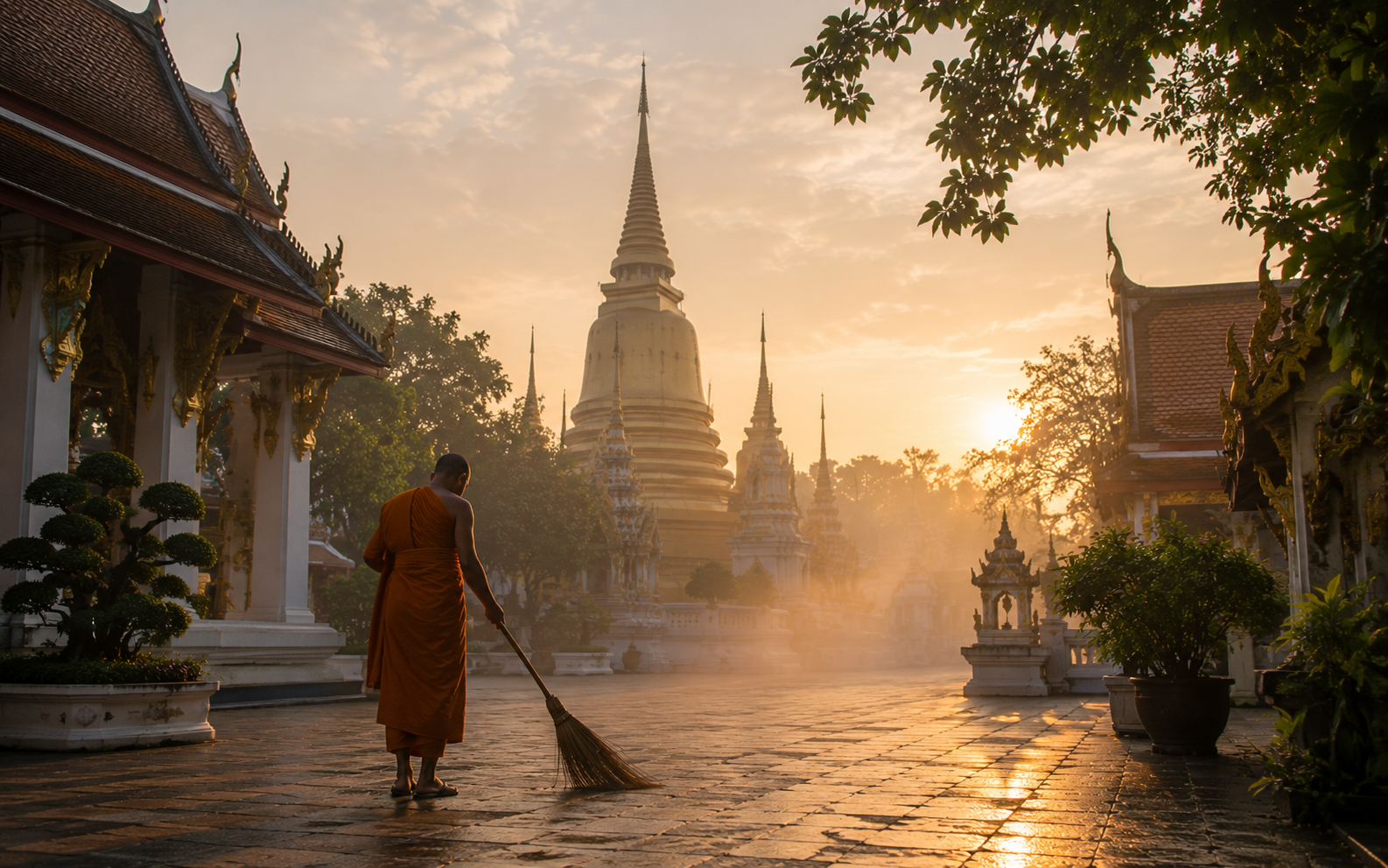
Monks are revered in Thai society, and there are specific protocols for interacting with them. Women should never touch a monk or hand anything directly to one — place the object on a cloth or table for the monk to pick up. Everyone should stand or sit lower than monks when possible, and never stand over a seated monk.
If a monk speaks to you, it's perfectly fine to have a conversation. Many younger monks are eager to practise their English and are happy to explain aspects of Buddhism and temple life. Just approach the conversation with respect and genuine curiosity.
Offerings and Donations
You don't need to be Buddhist to make an offering at a Thai temple. Small donation boxes are placed throughout the grounds, and contributing a few baht is a kind gesture that helps maintain these beautiful spaces. Lotus flowers, incense, and candles can be purchased at stalls near most temples — buying from these vendors also supports the local community.
The most important thing to remember is that Thai temples are living, breathing places. They're not relics of the past. Monks live, study, and meditate there every day. Families come to pray during difficult times. Children play in the courtyards after school. Treat them as you would any sacred, personal space — with gentleness, humility, and an open heart.