Bangkok is a city of concrete, glass, and exhaust fumes. That's the version most people see from street level. But look up — literally — and a different story is unfolding. Across the city, rooftops that once sat empty are being transformed into gardens, farms, and green sanctuaries. It's quiet, it's beautiful, and it's changing how Bangkokians think about their city.
The Urban Farming Movement
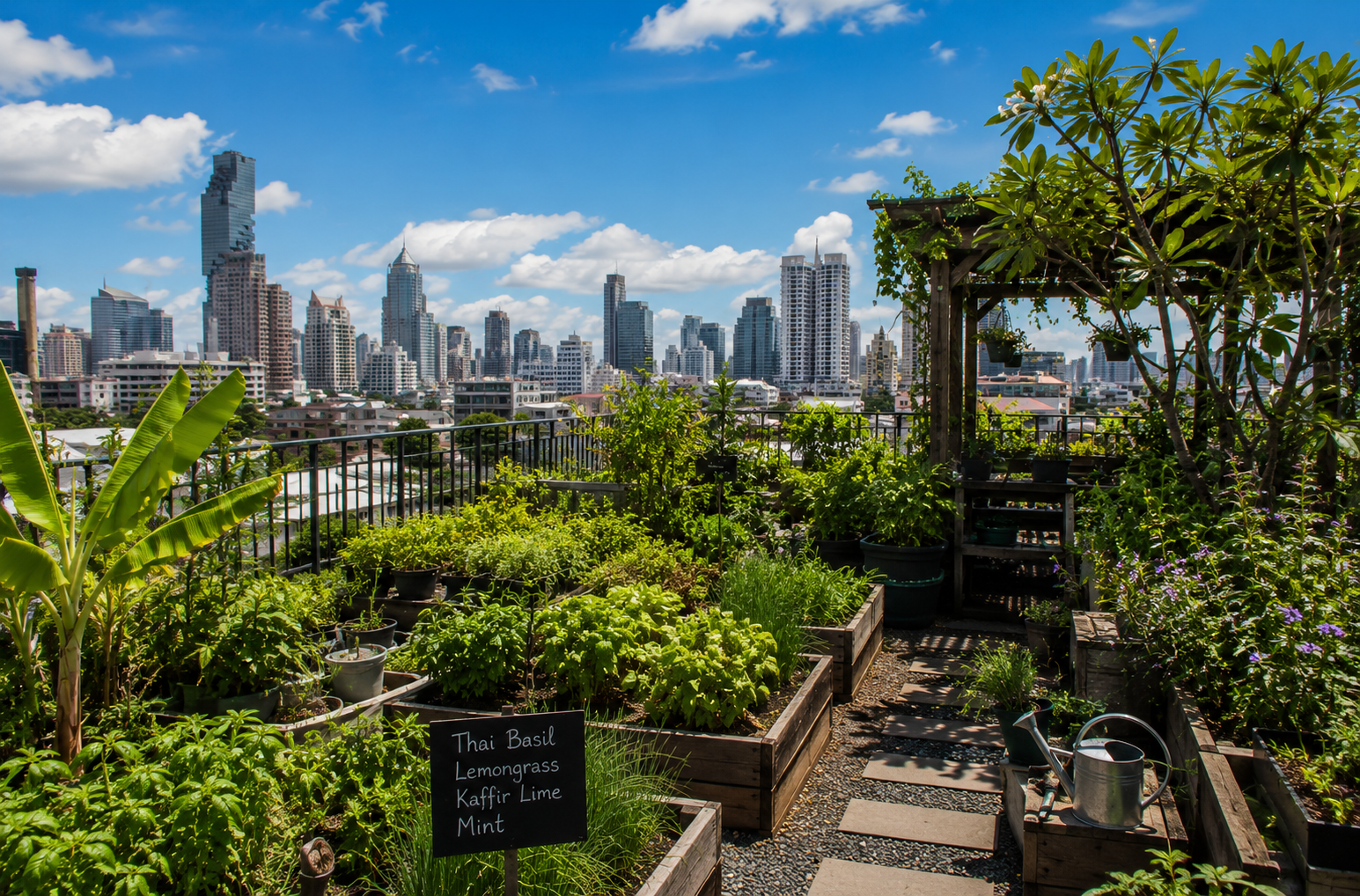
Siam Green Sky, perched on top of a university building in the heart of the city, is one of Southeast Asia's largest rooftop farms. Vegetables, herbs, and rice are grown using organic methods, and the produce supplies the university's cafeteria. It's a working farm on a rooftop — the kind of thing that sounds impossible until you see it. Visitors are welcome, and the views of the Bangkok skyline from between rows of morning glory and Thai basil are genuinely surreal.
The movement has spread. Condominiums are converting unused roof space into communal gardens where residents grow chillies, lemongrass, and lime trees. Hotels are cultivating herbs for their restaurants. Even some shopping malls have gotten involved, installing green spaces on their upper levels as part of a broader push toward Bangkok's evolving urban identity.
Why It Matters in Bangkok
Bangkok floods. It's a city built on swampland, and as development has replaced green space with concrete, water drainage has become a serious problem. Rooftop gardens help. They absorb rainwater, reduce heat — a phenomenon known as the urban heat island effect — and improve air quality. In a city where temperatures regularly exceed 35 degrees, even a small patch of green on a rooftop can lower the temperature of the building below by several degrees.
There's also a food security angle. Bangkok imports most of its fresh produce from the surrounding provinces. Rooftop farms won't replace that supply chain, but they offer a local supplement that reduces transport emissions and gives city residents access to truly fresh food — picked that morning, eaten at lunch.
The Community Gardens
Some of the most interesting rooftop projects are community-driven. In the Bangrak district, a group of neighbours pooled money to convert an abandoned rooftop into a shared garden. They grow herbs, vegetables, and flowers, and the space has become an informal community centre — a place where neighbours who never spoke before now swap recipes and gardening tips over morning coffee.
Finding Them
Most of Bangkok's rooftop gardens aren't advertised. They don't have Instagram accounts or TripAdvisor pages. The best way to find them is to ask. Talk to building managers, local community groups, or university sustainability departments. Many welcome visitors — they're proud of what they've built and happy to show it off. Just look up. In a city that's constantly reaching skyward, some of the most grounded things are happening at the very top.